
Understanding Your Newborn’s Vision
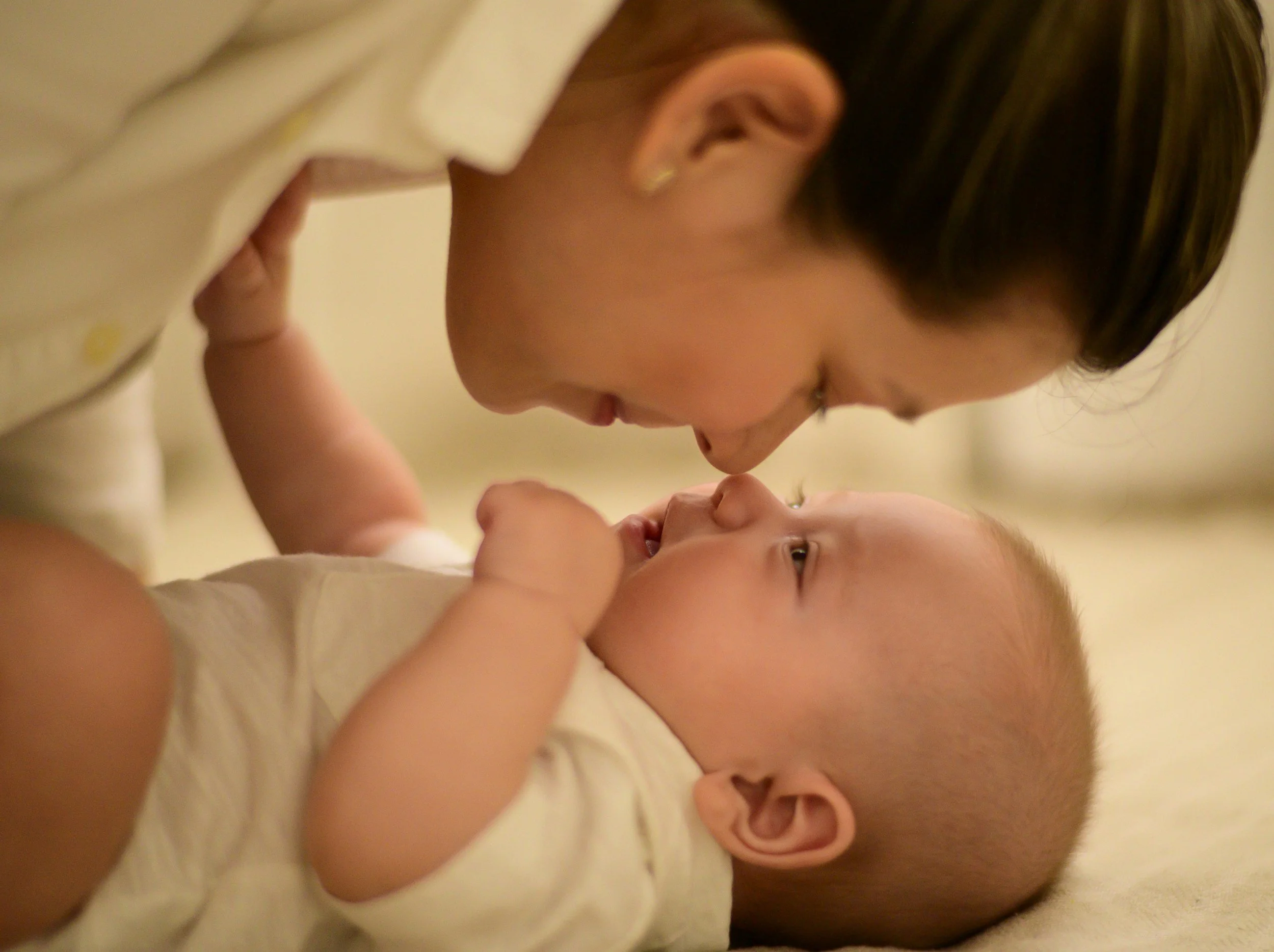
Your baby can likely see your face—but only when you’re up close
(and not as clearly as you can see theirs) ❤️
Vision is still developing at birth and continues to mature rapidly in the early months of life. Newborn vision starts off quite blurry and gradually sharpens as eye muscles strengthen and visual pathways in the brain mature. It will take years for vision to become as clear as an adult’s.
In the early months, babies can focus best on objects and people 8–10 inches away—the perfect distance to gaze at you while feeding or being held. Each time your baby looks at you, their brain is gathering important information to help refine their vision and support overall development.
One of the first things I look for as an occupational therapist is visual tracking. It may seem small, but it plays a big role in how babies learn to move, coordinate, and interact with the world.
👁 Visual Tracking Milestones (Approximate)
Horizontal tracking (side to side): 5–8 weeks
Vertical tracking (up and down): 8–10 weeks
Diagonal tracking (corner to corner): 10–12 weeks
Tracking isn’t just about the eyes—it helps build your baby’s head control, coordination, and body awareness (where the eyes go, the body follows). Every time your baby follows a moving object, they’re strengthening the connection between their eyes, brain, and muscles, setting the stage for future milestones like reaching, rolling, crawling, and even reading.
🧠 Things to Know About Your Baby’s Developing Vision
1. Your baby is near-sighted: Newborns see best at about 8–12 inches away—the exact distance to your face when they’re in your arms.
2. Slightly crossed eyes can be normal in the early weeks- Your baby’s eyes may appear crossed or misaligned. This usually improves as their oculomotor skills develop and eye coordination strengthens.
3. Following a moving object takes practice: Around week 5, babies may begin tracking a high-contrast object moving slowly across their visual field. This skill improves steadily with gentle practice over the next few months.
4. Depth perception is still developing: Binocular vision (both eyes working together) typically develops around 3 months, often alongside improved midline control (keeping the head centered and bringing hands together). This allows babies to better understand the size, shape, and distance of objects.Tummy time gives babies the postural control, symmetry, vestibular input, and active movement experiences their visual system needs to learn how to use both eyes together.
5. Babies enjoy a change of scenery 🙂 High-contrast images are very engaging for newborns, but variety matters. Babies also love faces, nature, light, and mirror play.
🖤 How to Support Your Baby’s Visual Development at Home
Use high-contrast black-and-white cards, mirrors or toys during play and tummy time
Hold images or toys 8–12 inches from your baby’s face
Encourage a variety of positions (on back, sidelying on both sides, on belly)
Move objects slowly side to side, up and down, and diagonally to encourage tracking
Offer frequent tummy time opportunities throughout the day
Add sound (a soft rattle or your voice) to increase engagement and support sensory integration
When to Reach Out for Support
Horizontal tracking is more than a cute milestone—it can also help us spot early signs of head turn preferences or torticollis. If you notice your baby consistently turning or favoring one side, it’s a good time to reach out for an occupational therapy evaluation.
Early support can make a meaningful difference in your baby’s comfort, movement, and development.
At Little Roots OT, we consider vision as part of the whole-body, whole-nervous-system picture—helping babies grow, connect, and thrive with confidence.